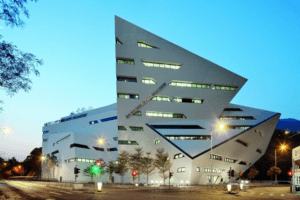
Decentralizing University Education in Haiti
Decentralizing university education in Haiti is crucial for several reasons:
1. Accessibility
Currently, university education is primarily concentrated in Port-au-Prince at the Université d'État d'Haïti. This centralization means that students from other regions must move to the capital to pursue higher education. Decentralizing would make university education more accessible to students across the country.

2. Cost Reduction
Families already face significant financial burdens, as they often pay tuition fees for private and religious schools from Pre-K to 12th grade. By decentralizing universities, students can stay closer to home, reducing the costs associated with relocating to Port-au-Prince, such as housing, transportation, and living expenses.
3. Quality Improvement
The existing public schools, known as National Schools and Lycées, are few and generally offer poor-quality education. Establishing universities in various provinces can raise the overall educational standards by providing better resources and facilities closer to where students live.
4. Economic Growth
Decentralizing universities can stimulate economic development in other regions. University campuses can create jobs, attract businesses, and contribute to the local economy. This can lead to a more balanced economic development across the country.

5. Social Stability
Concentrating higher education in Port-au-Prince contributes to overcrowding and increases the pressure on the city's infrastructure. Decentralizing education can help reduce the migration pressure on the capital, leading to better social stability and living conditions in both the capital and other regions.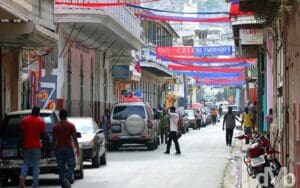
6. Equity
Providing equal educational opportunities across the country ensures that all students, regardless of their geographic location, have a fair chance to pursue higher education. This can lead to a more equitable society where opportunities are not limited by geography.
7. RESET AND REBUILD HAITI'S EDUCATION INFRASTRUCTURE
Haiti stands at a critical turning point. Today, its education system is producing a workforce that too often leaves the country in search of opportunity abroad - in the Dominican Republic, the United States, Chile, and beyond. While humanitarian immigration programs provide temporary relief, they also contribute to the ongoing loss of talent Haiti urgently needs for its own development.
To change this reality, we must rebuild and modernize Haiti’s education infrastructure - placing the nation on a true path toward sustainable growth.
Although precise statistics for 2025 remain limited, the overall picture is clear and deeply concerning: fewer than 20% of students transition from primary to secondary school, and only a small fraction of those reach university. In total, less than 2% of the population holds a university degree.
This must change.
The path forward is clear: we must invest in ourselves. By expanding access to high-quality education across Haiti, we can empower a new generation of leaders, professionals, and innovators - committed to building a stronger, more self-reliant nation.
Our vision is bold: to launch GIVE BACK HAITI / Fund Raising Campaign - a global movement and call to action. Haitians and friends of Haiti around the world will unite under this Task Force, in partnership with the Université d’État d’Haïti, to develop modern university campuses in Cap-Haïtien, Gonaïves, Les Cayes, Hinche, Port-de-Paix, Jacmel, and Jérémie.
Now is the time to act.
Together, we can invest in education, empower our youth, and build the future Haiti deserves.